
Blood in urine, medically known as haematuria, means red blood cells have appeared in your pee. Sometimes you can see it clearly when your urine looks pink, red or dark brown in the toilet bowl. Other times the blood remains completely invisible to your naked eye and only shows up during routine laboratory testing. Finding blood in your urine isn’t always a cause for panic, but it always needs proper medical investigation to identify what’s causing it.
This article explains the common and serious causes of blood in your urine, ranging from urinary tract infections and kidney stones to more concerning conditions that require prompt treatment. You’ll learn which accompanying symptoms suggest you need urgent care, what diagnostic tests doctors use to identify the source of bleeding, and how different underlying causes get treated. Understanding these warning signs helps you respond appropriately and seek the right medical attention when you need it most.
Why blood in urine needs urgent attention
Blood in your urine always requires medical evaluation because it can signal conditions ranging from minor infections to life-threatening cancers. Even if you only notice blood once and have no other symptoms, you shouldn’t dismiss it or wait to see if it happens again. The underlying blood in urine causes include bladder cancer, kidney cancer and prostate problems, which respond far better to treatment when doctors catch them early. A single episode of visible blood could be the only warning sign your body gives you before a serious condition progresses.
Early detection saves lives
Cancer remains one of the most concerning reasons for blood appearing in your urine, particularly bladder and kidney cancers that often present with haematuria as their first symptom. When doctors diagnose these cancers at early stages, your survival rates improve dramatically compared to late-stage detection. Treatment becomes simpler, less invasive and more successful when you seek help promptly rather than waiting for additional symptoms to develop.
Early investigation of blood in your urine can mean the difference between catching cancer at a treatable stage and facing a more difficult prognosis later.
How to respond if you see blood in urine
When you first notice pink, red or brown colouration in your urine, your immediate response should balance urgency with calm action. Don’t ignore it or convince yourself it will go away on its own, but also understand that panic won’t help you get the proper diagnosis and treatment. Most blood in urine causes turn out to be treatable conditions rather than worst-case scenarios, yet all require professional medical assessment to identify the underlying problem.
Stay calm but act quickly
Contact your GP surgery as soon as you can for an urgent appointment, typically within 24 to 48 hours of noticing the blood. If you cannot reach your GP or need guidance outside surgery hours, ring NHS 111 for advice from trained health advisers who can direct you to appropriate care. They’ll assess your symptoms and determine whether you need immediate attention or can wait for a routine appointment with your doctor or a urologist.

Even a single episode of visible blood in your urine warrants medical investigation, regardless of whether you feel pain or have other symptoms.
What to do immediately
Before your appointment, avoid taking aspirin or other blood-thinning medications unless your doctor specifically prescribed them for an existing condition, as these can worsen bleeding. Keep a written record of when you first noticed the blood, how many times it appeared, what colour it was, and any other symptoms like pain, fever or changes in how often you urinate. This information helps your doctor identify blood in urine causes more quickly and order appropriate diagnostic tests during your consultation.
Common causes of blood in urine
Blood in urine causes range from minor infections that clear up quickly with antibiotics to more persistent structural problems in your urinary system. Understanding these common triggers helps you recognise patterns in your symptoms and provide useful information to your doctor. While some causes prove entirely harmless and resolve on their own, others require targeted medical treatment to prevent complications or progression to more serious conditions.
Urinary tract infections
Urinary tract infections, commonly called UTIs, rank among the most frequent blood in urine causes in both women and men. These bacterial infections typically affect your bladder or urethra, causing inflammation that damages tiny blood vessels in the urinary tract lining. You’ll often notice a burning sensation when you urinate, feel an urgent need to go more frequently than usual, and may develop cloudy or strong-smelling urine alongside the blood. Women experience UTIs more commonly than men due to their shorter urethras, which allow bacteria easier access to the bladder.
Doctors treat most UTIs successfully with a short course of antibiotics, usually lasting three to seven days depending on the infection’s severity and location. The blood in your urine typically disappears within 48 hours of starting treatment, though you should complete the full antibiotic course even after symptoms improve.
Kidney stones
Kidney stones form when minerals and salts crystallise inside your kidneys, creating hard deposits that can range from tiny grains to golf-ball sized masses. These stones cause bleeding when their sharp edges scrape against the delicate lining of your urinary tract as they move from your kidney toward your bladder. The blood appears intermittently, often accompanied by severe cramping pain in your back or side that comes in waves as the stone shifts position.
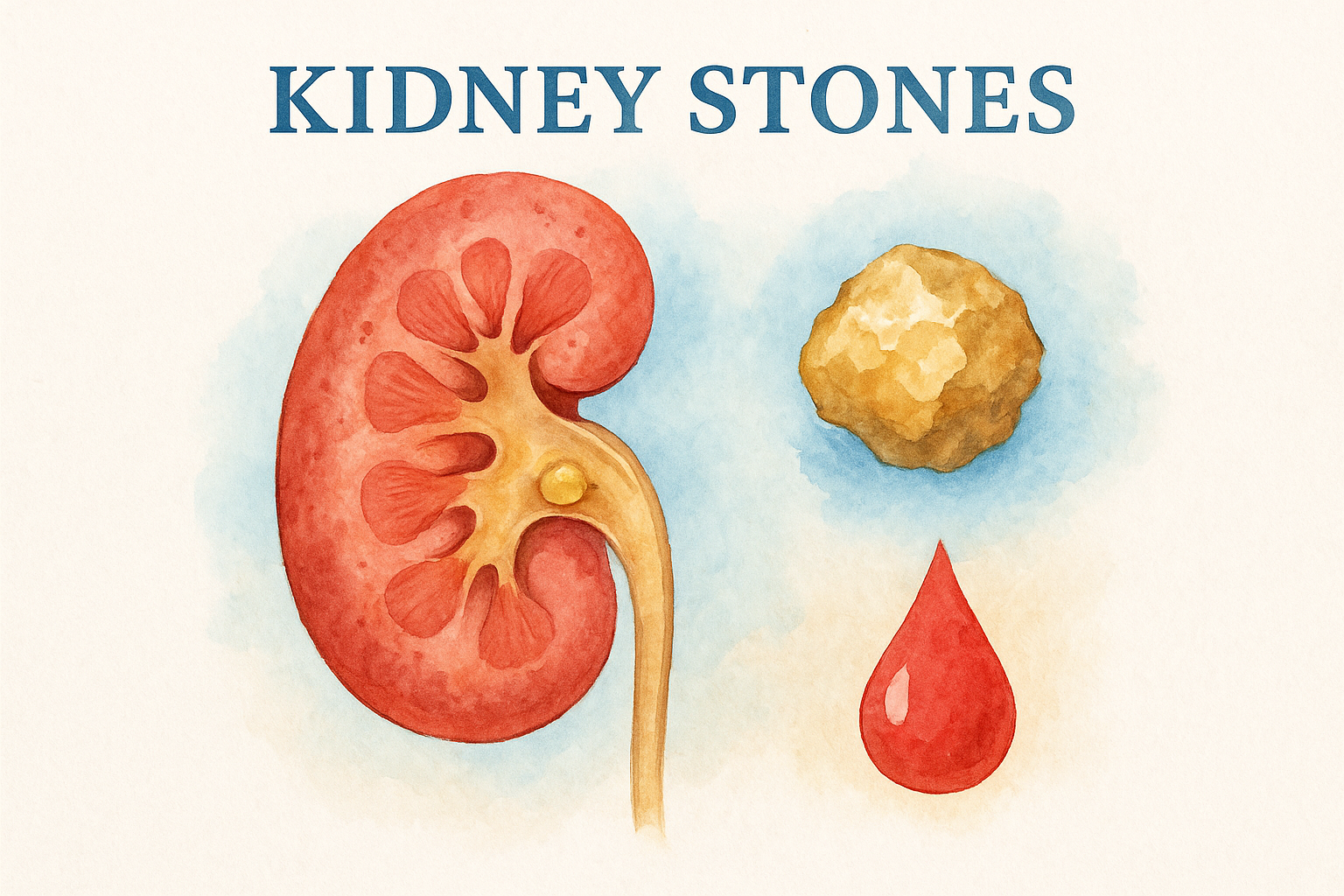
Smaller stones frequently pass on their own through increased fluid intake and pain medication, while larger stones may require medical intervention such as shock wave therapy or surgical removal. Your doctor can recommend dietary changes and increased water consumption to reduce your risk of developing future stones.
Prostate enlargement in men
Benign prostatic hyperplasia, or prostate gland enlargement, affects most men over 50 and commonly causes microscopic blood in urine that you cannot see. Your enlarged prostate squeezes your urethra, creating pressure that damages blood vessels and makes urination difficult. You might struggle to start your urine stream, wake multiple times at night to urinate, or feel your bladder never empties completely.
Prostate enlargement represents one of the most treatable blood in urine causes when diagnosed early, with medications and minimally invasive procedures offering effective relief.
Other common triggers
Vigorous exercise, particularly long-distance running or contact sports, can temporarily cause blood to appear in your urine through bladder trauma or dehydration effects. Certain medications including blood thinners like warfarin and aspirin increase bleeding risk throughout your body, including your urinary tract. Some people inherit conditions such as sickle cell disease that affect blood cells and cause haematuria without underlying urinary problems.
Symptoms that suggest a serious cause
Certain symptoms accompanying blood in your urine signal potentially serious underlying conditions that need urgent medical evaluation. While isolated haematuria without other symptoms still requires investigation, the presence of additional warning signs increases the likelihood of conditions like cancer, severe infections or kidney disease. Recognising these red flag symptoms helps you understand when to seek immediate care rather than waiting for a routine appointment with your GP.
Warning signs requiring immediate care
You need to visit A&E or call 999 if blood in your urine appears alongside severe abdominal or back pain that prevents you from finding a comfortable position, as this pattern suggests kidney stones blocking your urinary tract or a serious kidney infection. High fever above 38°C combined with shaking chills and blood in your urine indicates a potentially life-threatening kidney infection that requires intravenous antibiotics and hospital admission. Sudden inability to urinate despite feeling your bladder is full, particularly with visible blood, means your urinary tract may be completely blocked and needs emergency intervention.

Severe pain, high fever or complete inability to urinate alongside blood in your pee are medical emergencies that cannot wait for routine appointments.
Symptoms indicating ongoing problems
Unexplained weight loss combined with blood in your urine raises significant concern for kidney or bladder cancer, particularly if you’ve lost more than 5% of your body weight over three months without trying. Persistent fatigue that doesn’t improve with rest, alongside pale skin and blood in your urine, suggests anaemia from chronic bleeding that may indicate serious blood in urine causes requiring investigation. Bone pain in your back, hips or pelvis that worsens over time combined with haematuria can signal advanced prostate or bladder cancer that has spread beyond the original site.
Blood that continues appearing in your urine for more than two weeks, even without pain, deserves prompt specialist referral because painless haematuria represents a common early presentation of urological cancers. Night sweats soaking your bedclothes combined with blood in your urine and general feeling of being unwell warrant urgent assessment for systemic conditions affecting your kidneys or blood.
Tests and treatments for blood in urine
Your doctor uses a combination of diagnostic tests to identify the specific blood in urine causes affecting you, starting with simple urine analysis and progressing to more detailed imaging or internal examination if needed. Treatment depends entirely on what these tests reveal, ranging from antibiotics for infections to surgical procedures for stones or cancers. The diagnostic process typically begins at your GP surgery, though you may need referral to a urology specialist for certain investigations or treatments that require hospital equipment.
Initial diagnostic tests
Doctors start by collecting a clean-catch urine sample during your appointment, which goes to the laboratory for microscopic examination and chemical testing. This urinalysis checks for bacteria suggesting infection, identifies the number of red blood cells present, and detects proteins or other substances that point toward kidney disease. Your GP will also perform a physical examination including checking your abdomen for tenderness or masses, and men typically receive a digital rectal examination to assess the prostate gland’s size and texture.
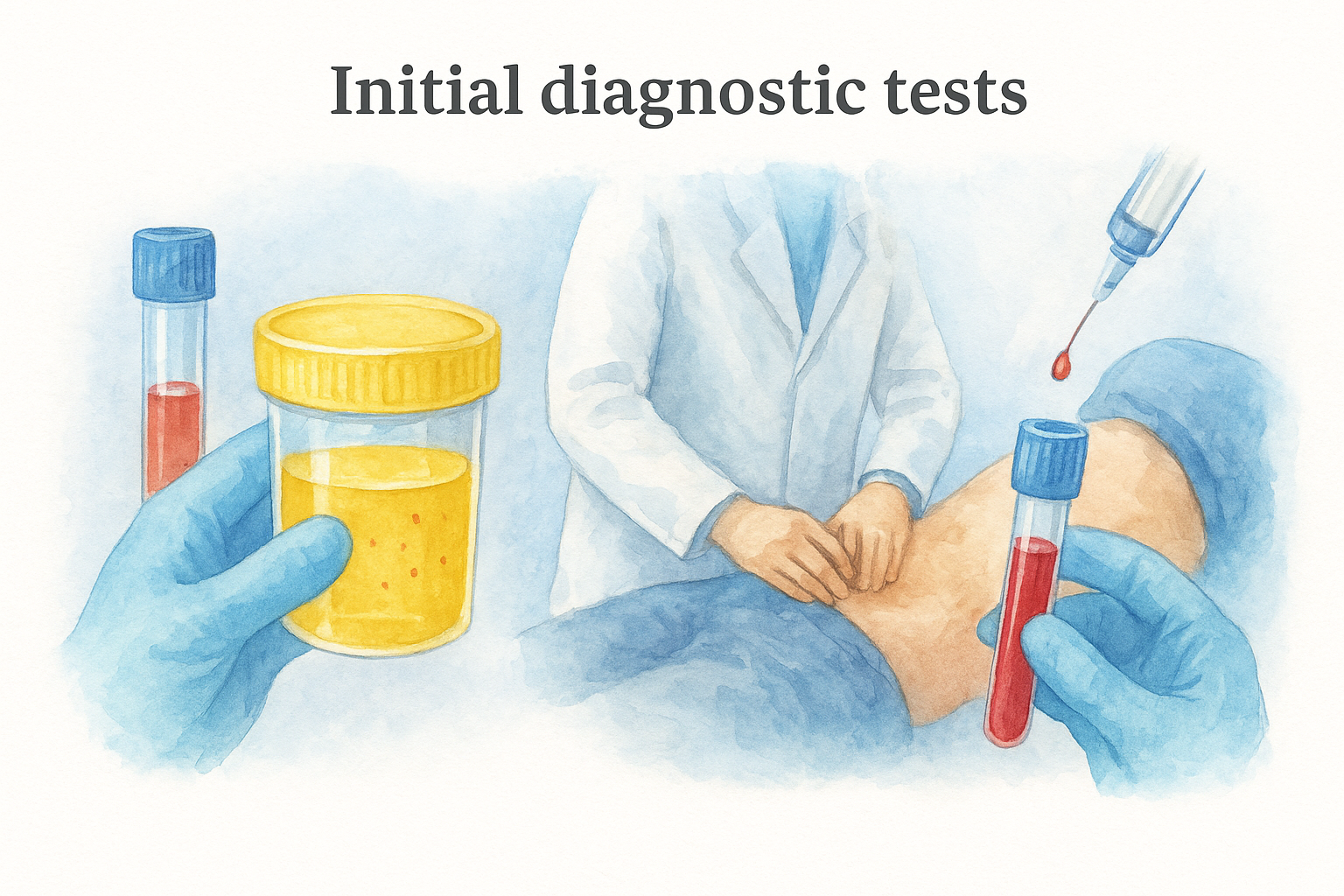
Blood tests help rule out kidney function problems and check for anaemia from chronic bleeding that might not be obvious from symptoms alone. These simple initial tests identify straightforward causes like urinary tract infections or medication effects in many patients, allowing treatment to begin immediately without need for further investigation.
Specialist investigations
When initial tests don’t explain your haematuria, your doctor refers you for cystoscopy, a procedure where a urologist passes a thin flexible tube with a camera through your urethra into your bladder. This allows direct visualisation of your bladder lining to spot tumours, stones or inflammation that other tests miss. CT scans or ultrasound imaging examine your kidneys and urinary tract for stones, masses or structural abnormalities causing bleeding.
Cystoscopy remains the gold standard test for investigating unexplained blood in urine because it provides direct visual confirmation of bladder conditions.
Some patients need a CT urogram, which combines CT scanning with contrast dye injected into your bloodstream to highlight your entire urinary system and reveal problems in the kidneys, ureters or bladder. Kidney biopsies become necessary when doctors suspect glomerulonephritis or other kidney diseases affecting the filtering units themselves rather than the collecting system.
Treatment approaches
Treatment targets the specific cause your tests identify rather than the blood itself. Antibiotics clear bacterial infections within days, while alpha-blocker medications help reduce prostate enlargement and improve urine flow in men with benign prostatic hyperplasia. Small kidney stones pass naturally with increased fluid intake and pain medication, though larger stones require shock wave lithotripsy or surgical removal.
Bladder and kidney cancers need surgical removal, often using minimally invasive techniques like robotic surgery that reduce recovery time compared to traditional open operations. Your urologist may recommend regular monitoring through repeat cystoscopy examinations if initial tests show no serious cause but blood continues appearing intermittently.

Getting specialist help
When blood appears in your urine, you need expert assessment from a urologist who specialises in diagnosing and treating blood in urine causes. Your GP provides valuable initial investigation, but certain situations require a specialist’s advanced training and access to sophisticated diagnostic equipment like cystoscopy suites and imaging technology. Referral to a urologist becomes essential when initial tests fail to identify the cause, when imaging reveals suspicious masses or stones, or when your symptoms persist despite treatment.
Private urology consultations offer several advantages over NHS pathways, particularly when you face unexplained haematuria that raises concerns about serious conditions. You receive faster access to appointments, typically within days rather than weeks, allowing earlier diagnosis and treatment of potentially serious problems. Specialist urologists use cutting-edge techniques including robotic surgery for cancer treatment, which offers better outcomes with shorter recovery times compared to traditional approaches.
If you’re experiencing blood in your urine and want prompt specialist evaluation, contact Mr Ashwin Sridhar’s urology practice for a private consultation. Early specialist assessment provides peace of mind and ensures any serious conditions receive immediate, expert attention.