
Kidney stones form when certain minerals and salts in your urine become too concentrated and crystallise into hard deposits. Your kidneys filter waste from your blood and remove it through urine. When there is too much of substances like calcium, oxalate or uric acid and not enough water to dissolve them, these chemicals stick together and form stones. The process can happen gradually over weeks or months without you noticing any symptoms.
Understanding why kidney stones develop helps you take steps to prevent them. This article explores the main causes behind stone formation, from diet and dehydration to genetic factors and underlying medical conditions. You will learn how to identify your personal risk factors, what lifestyle choices increase your chances of developing stones, and which medications might contribute to the problem. Most importantly, you will discover practical ways to protect your kidney health and reduce your risk of future stones.
Why understanding kidney stone causes matters
Kidney stones affect roughly one in ten people during their lifetime, and the numbers continue to rise. When you know what triggers stone formation, you can make informed decisions about your diet, hydration, and lifestyle. This knowledge transforms a painful condition from something that happens to you into something you can actively prevent. Medical professionals see many patients who develop stones repeatedly because they never learned what caused their first episode.
Prevention starts with knowledge
Your body gives you signals about what increases your stone risk, but you need to recognise them. Dietary choices account for a significant portion of stone formation, yet most people continue eating and drinking the same way after passing their first stone. Understanding the link between certain foods, inadequate fluid intake, and crystal formation helps you adjust your habits before stones develop. You can work with your doctor to identify which specific causes of kidney stones apply to your situation and create a personalised prevention plan.
Knowledge about your individual risk factors gives you the power to prevent future episodes and protect your kidney function.
The recurrence risk matters
Half of all people who develop one kidney stone will experience another within five years without preventive measures. This recurrence rate drops significantly when you understand your triggers and take action. Each stone episode damages your kidneys slightly and increases your long-term risk of chronic kidney disease.
How to recognise your personal risk factors
Your personal risk begins with family history and extends through your daily habits, health conditions, and medications. Some people inherit a genetic tendency towards stones, whilst others develop them through lifestyle factors they can change. You need to examine both categories to understand your complete risk profile. A thorough assessment of your circumstances helps you and your doctor create an effective prevention strategy.
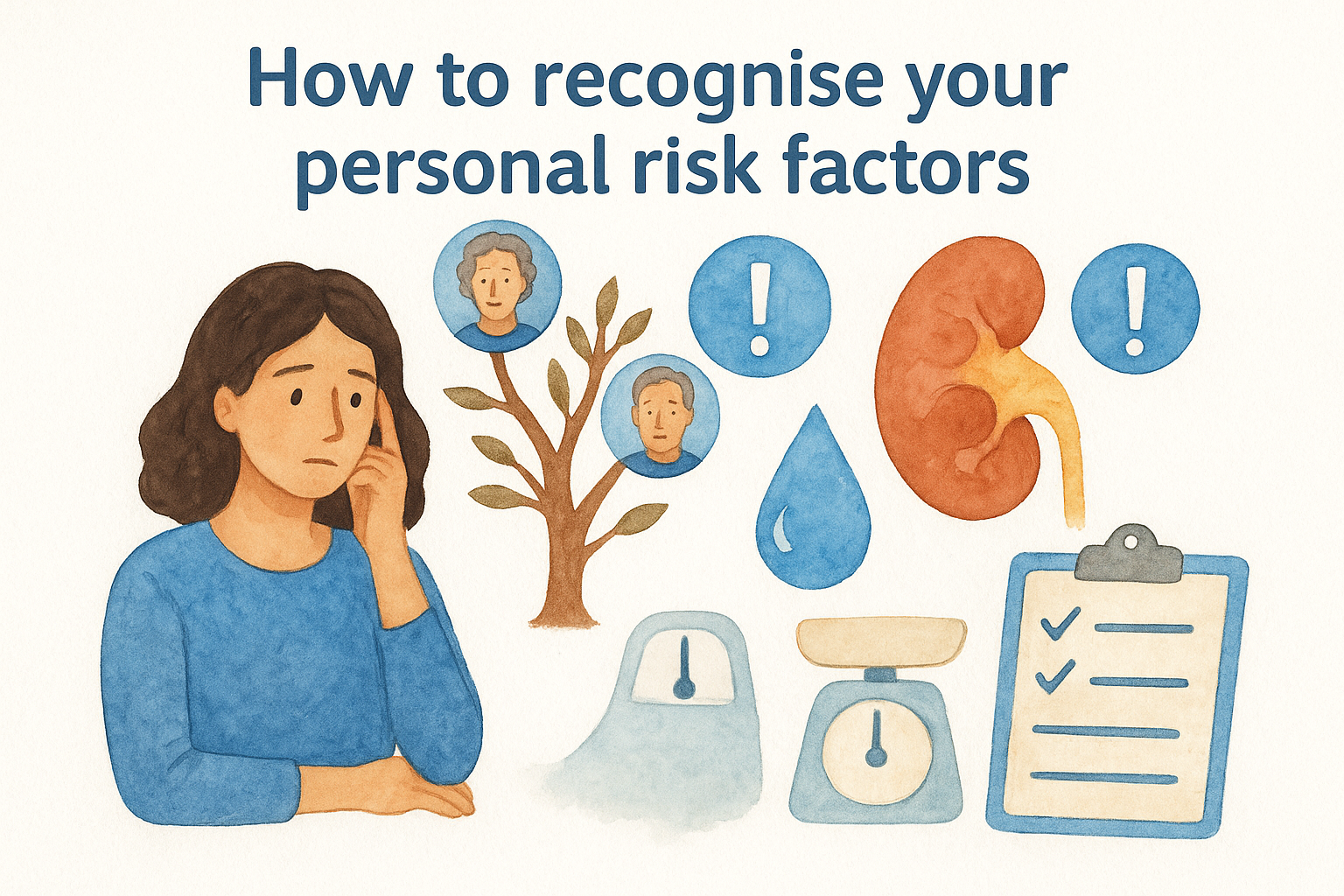
Your family history and genetics
Genetic factors play a significant role in stone formation. If your parents or siblings have had kidney stones, your risk increases substantially compared to people without this family history. Certain inherited conditions, such as cystinuria or primary hyperparathyroidism, directly cause stone formation by affecting how your body processes minerals. Ask your relatives about their kidney stone history and share this information with your doctor during consultations.
Warning signs in your health patterns
Recurring urinary tract infections, digestive problems, or gout all signal elevated risk for stones. Chronic dehydration shows up through consistently dark urine, infrequent toilet visits, or feeling thirsty most of the time. Your body weight matters too. Carrying extra weight or rapid weight gain increases your likelihood of developing stones. Track these patterns over several months to spot trends you might otherwise miss.
Understanding the causes of kidney stones in your own life requires honest assessment of your habits and health history.
Review your medical history
Previous stone episodes make future stones more likely without preventive action. Medical procedures such as gastric bypass surgery alter how your body absorbs nutrients and can trigger stone formation. Check whether you take medications that increase stone risk, including certain diuretics, calcium-based antacids, or supplements with high doses of vitamin D or C. Conditions like inflammatory bowel disease or chronic kidney disease also raise your risk. Document everything when you meet with your urologist to ensure nothing gets overlooked in your assessment.
Main types of kidney stones and what causes them
Four main types of kidney stones exist, each with distinct causes and chemical compositions. Calcium stones make up roughly 80% of all cases, whilst the other three types account for the remaining 20%. Your stone type determines both your treatment approach and your prevention strategy. Knowing which type you have helps your doctor target the specific causes of kidney stones in your situation.
Calcium stones
Calcium oxalate stones form most frequently when your urine contains high levels of oxalate and too little fluid to dilute it. Your body produces some oxalate naturally, but you also absorb it from foods like spinach, nuts, chocolate, and tea. These stones develop when calcium in your urine binds with oxalate to create crystals. Low calcium intake actually increases your risk because dietary calcium binds with oxalate in your digestive system, preventing oxalate absorption into your bloodstream.
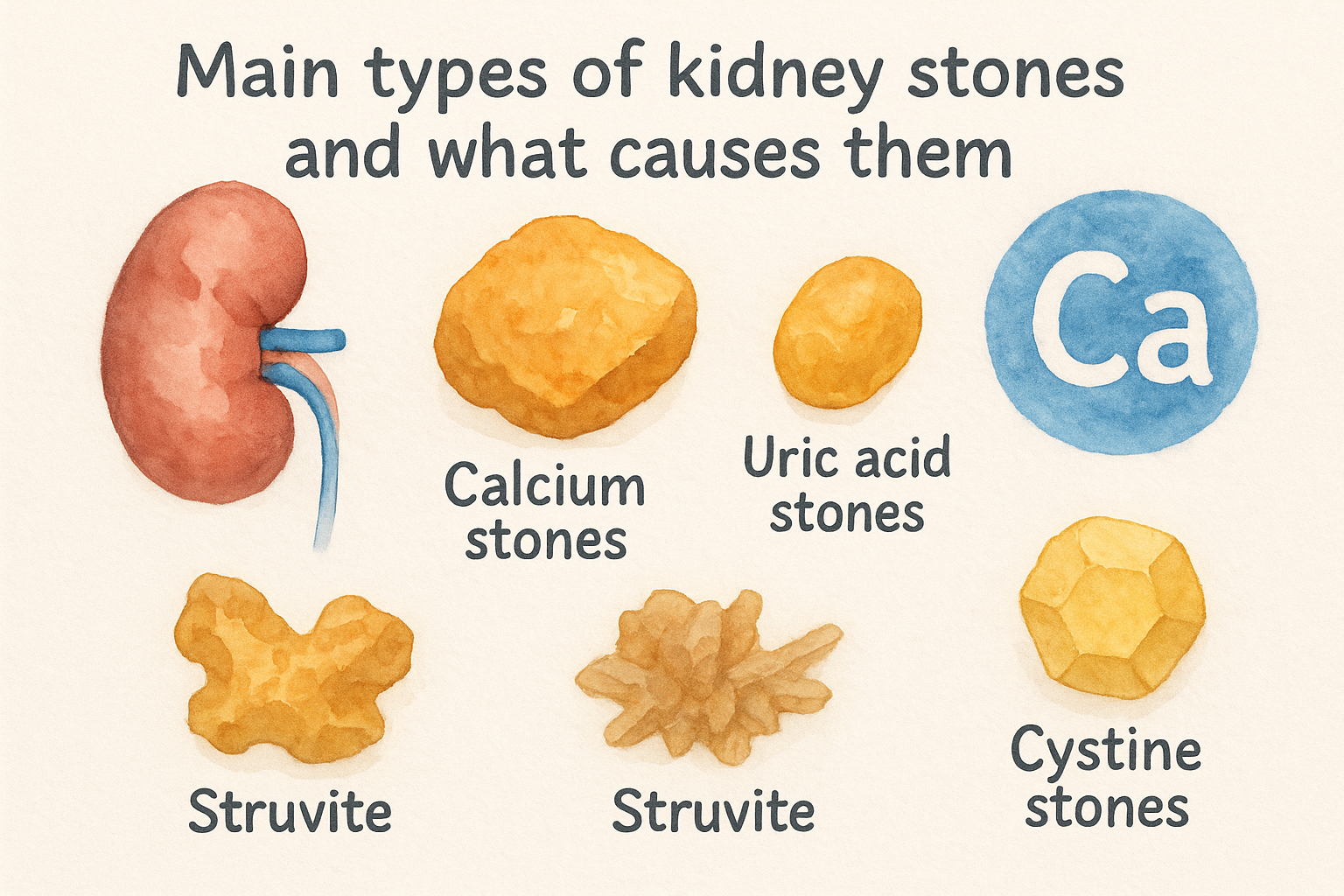
Calcium phosphate stones represent the less common calcium stone variety. High urine pH (alkaline urine) creates conditions where calcium phosphate crystals form easily. You might develop this type if you take certain medications that affect urine acidity or if you have metabolic conditions that alter your body’s acid-base balance.
Uric acid stones
High protein consumption from meat, fish, and poultry raises uric acid levels in your urine, creating conditions for these stones. Your body breaks down purines from animal proteins into uric acid. When your urine becomes too acidic and concentrated, uric acid crystals solidify into stones. People with gout or diabetes face higher risk because these conditions already increase uric acid production or affect urine acidity.
Your stone type guides prevention strategies because different minerals require different dietary and lifestyle adjustments.
Struvite and cystine stones
Struvite stones grow rapidly during urinary tract infections caused by specific bacteria that produce ammonia. The ammonia makes your urine alkaline, allowing magnesium ammonium phosphate crystals to form. Women develop these more often due to higher UTI rates. These stones can become large and branched, filling kidney spaces.
Cystine stones occur rarely and result from cystinuria, an inherited disorder. Your kidneys leak excessive cystine into your urine when you have this genetic condition. The cystine forms hexagonal crystals that clump together into stones. Treatment requires lifelong management because you cannot cure the underlying genetic cause.
Lifestyle and diet factors that raise your risk
Your daily choices create the environment where stones either form or stay dissolved in your urine. Diet and hydration habits account for many preventable cases of kidney stones, yet most people continue their usual patterns after recovering from their first episode. The minerals and salts in your food and drinks directly affect your urine composition. Insufficient fluid intake concentrates these substances, whilst specific foods increase the levels of stone-forming chemicals. You control these factors more than any other causes of kidney stones, making lifestyle changes your most powerful prevention tool.
Your fluid intake matters most
Dehydration ranks as the single biggest modifiable risk factor for stone formation. When you drink too little, your urine becomes concentrated with minerals that crystallise more easily. Your body needs roughly two to three litres of fluid daily to produce pale yellow urine and keep substances properly diluted. Hot weather, intense exercise, or physically demanding jobs increase this requirement because you lose more fluid through sweat.
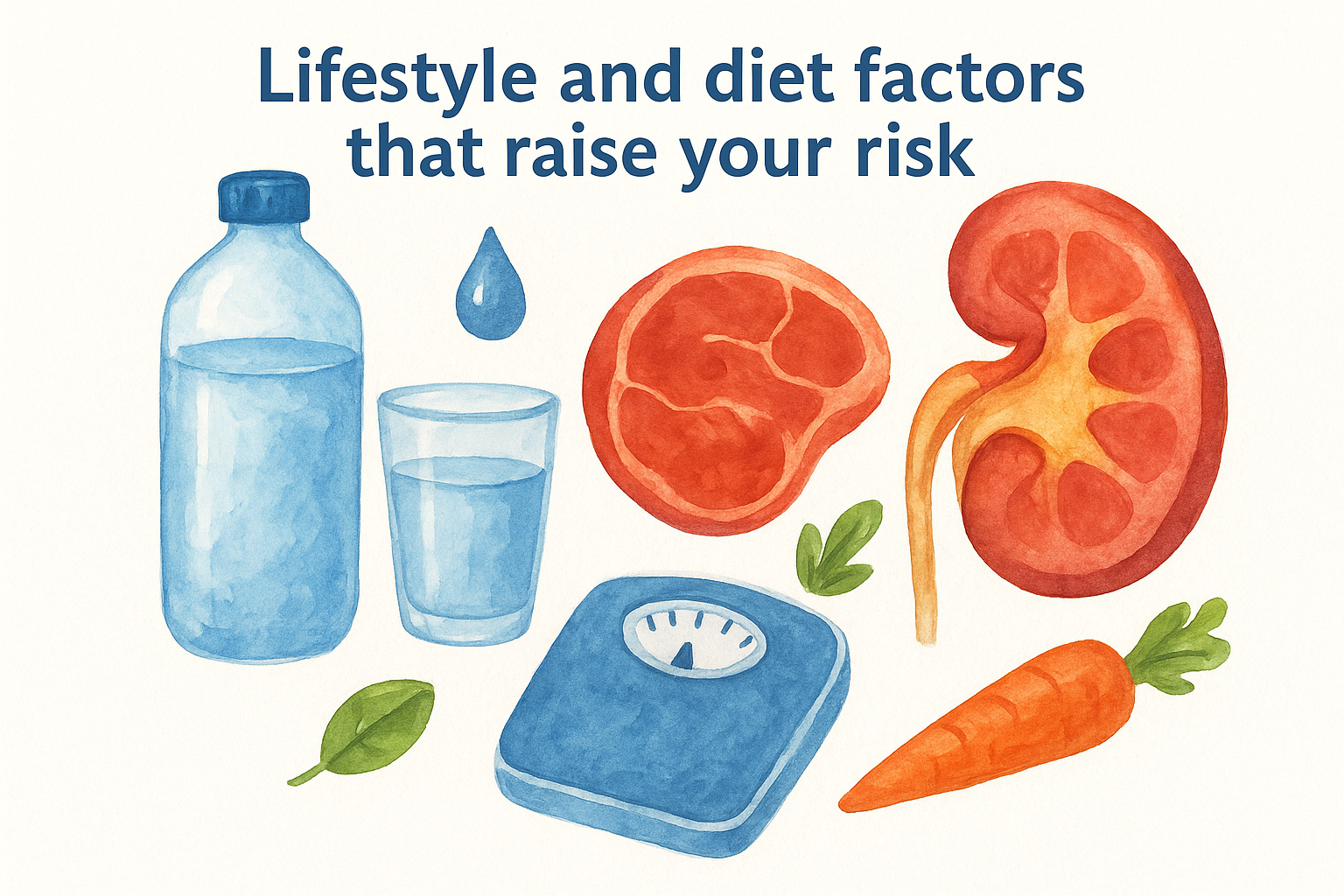
Water works best for prevention, whilst sugary drinks and excessive caffeine can worsen your risk. Dark-coloured urine signals that you need to drink more. Many people mistake thirst for adequate hydration, but by the time you feel thirsty, your urine has already become concentrated. Set regular drinking reminders on your phone or keep a water bottle visible throughout your day to maintain consistent hydration.
Your urine colour provides the simplest indicator of whether you drink enough fluid to prevent stone formation.
Dietary sodium and protein levels
High salt intake forces your kidneys to excrete more calcium into your urine, creating ideal conditions for calcium stones. Most dietary sodium comes from processed foods, restaurant meals, and table salt rather than naturally occurring sodium in fresh ingredients. Aim to consume less than 2,300 milligrams of sodium daily by checking food labels and choosing fresh over packaged options.
Excessive protein from animal sources raises uric acid and calcium levels in your urine whilst reducing citrate, a natural stone inhibitor. Your body produces uric acid when breaking down purines found in red meat, poultry, fish, and seafood. Balanced protein intake supports health, but consuming large portions multiple times daily increases your stone risk substantially. Consider plant-based protein sources like beans and lentils several times weekly to reduce this risk.
Weight and physical activity patterns
Obesity and rapid weight gain change how your body processes calcium and other minerals, increasing stone formation risk. Extra body weight affects insulin resistance and acid levels in your urine. Physical inactivity compounds this problem because sedentary habits promote metabolic changes that favour stone development. Regular movement helps your body maintain healthy mineral balance and proper urine flow.
Crash diets and extreme weight loss programmes can temporarily spike your stone risk through rapid metabolic changes. Choose gradual, sustainable weight loss of 0.5 to 1 kilogram weekly through balanced eating and regular activity rather than restrictive fad diets that shock your system.
Medical conditions and medicines linked to stones
Your underlying health conditions and the medications you take can significantly influence stone formation, often in ways you might not expect. Certain diseases alter how your body processes minerals and chemicals, creating an environment where stones develop more easily. Prescription medications sometimes have the unintended side effect of increasing stone risk, even when they successfully treat your primary condition. Recognising these medical causes of kidney stones helps you and your doctor adjust treatment plans or add preventive measures to protect your kidneys whilst managing your other health needs.
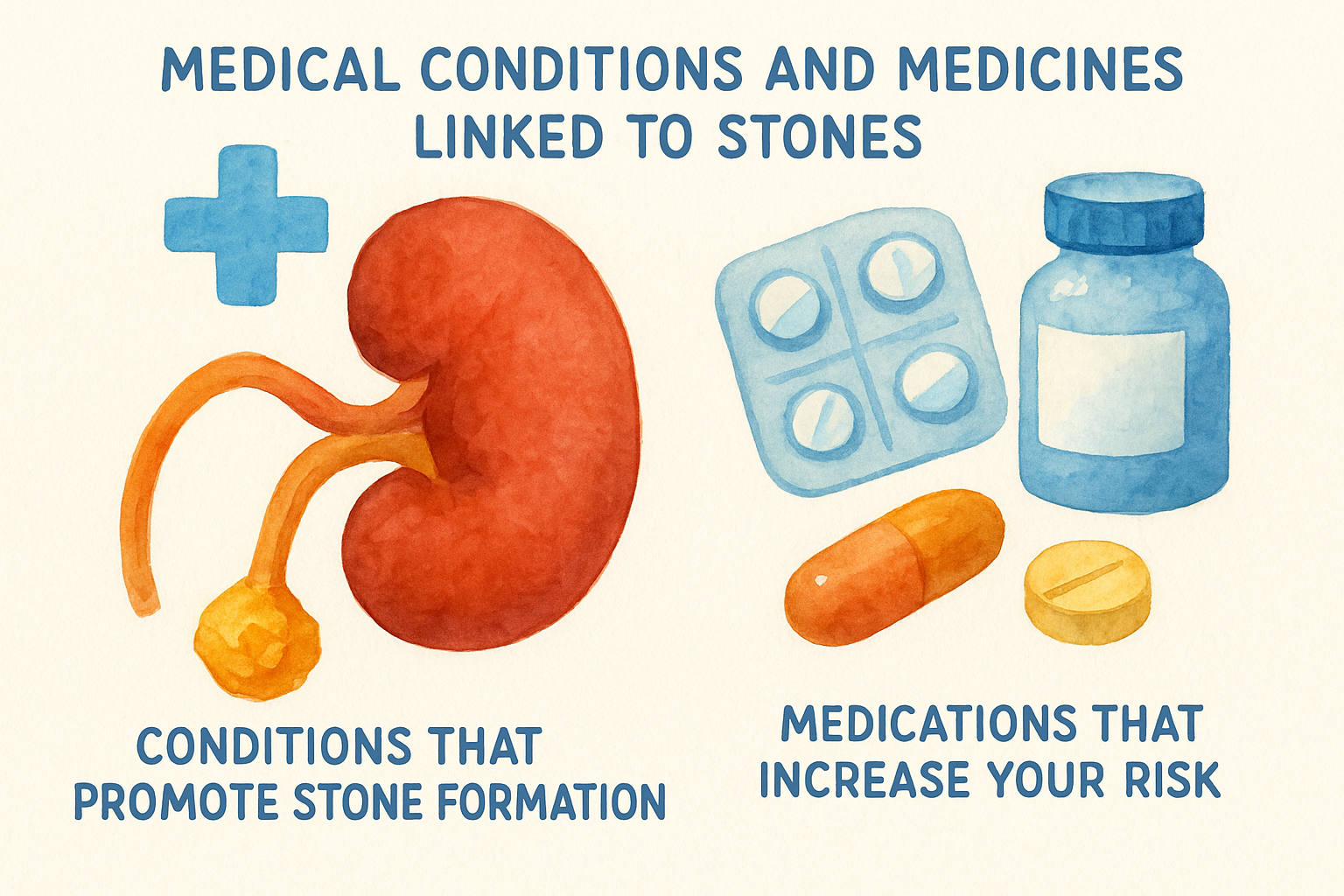
Conditions that promote stone formation
Hyperparathyroidism causes your body to produce too much parathyroid hormone, which raises calcium levels in your blood and urine. This excess calcium crystallises into stones when your kidneys work to remove it. Inflammatory bowel diseases like Crohn’s disease and ulcerative colitis affect how your intestines absorb nutrients and water, leading to changes in your urine composition that favour stone development.
Gout creates high uric acid levels throughout your body, increasing your risk of uric acid stones. People with type 2 diabetes face elevated risk because the condition affects urine acidity and your body’s metabolic processes. Renal tubular acidosis prevents your kidneys from properly removing acid from your blood, causing calcium phosphate stones to form in alkaline urine. Chronic urinary tract infections, particularly those caused by specific bacteria, create the conditions for struvite stones to develop rapidly.
Your medical team needs to know about all your health conditions to create an effective stone prevention strategy.
Medications that increase your risk
Diuretics help control blood pressure and fluid retention but can concentrate your urine and raise calcium levels, promoting stone formation. Some calcium-based antacids taken regularly for heartburn or indigestion increase the calcium available for stone development. Topiramate, an anti-seizure medication also used for migraines, changes your urine chemistry in ways that favour calcium phosphate stones.
Protease inhibitors for HIV treatment can crystallise directly in your urinary tract, whilst certain antibiotics like sulphonamides occasionally trigger stone formation. High doses of vitamin D supplements raise calcium absorption, and excessive vitamin C converts to oxalate in your body. Always inform your urologist about every medication and supplement you take, including over-the-counter products, so they can assess your complete risk profile and suggest alternatives when possible.
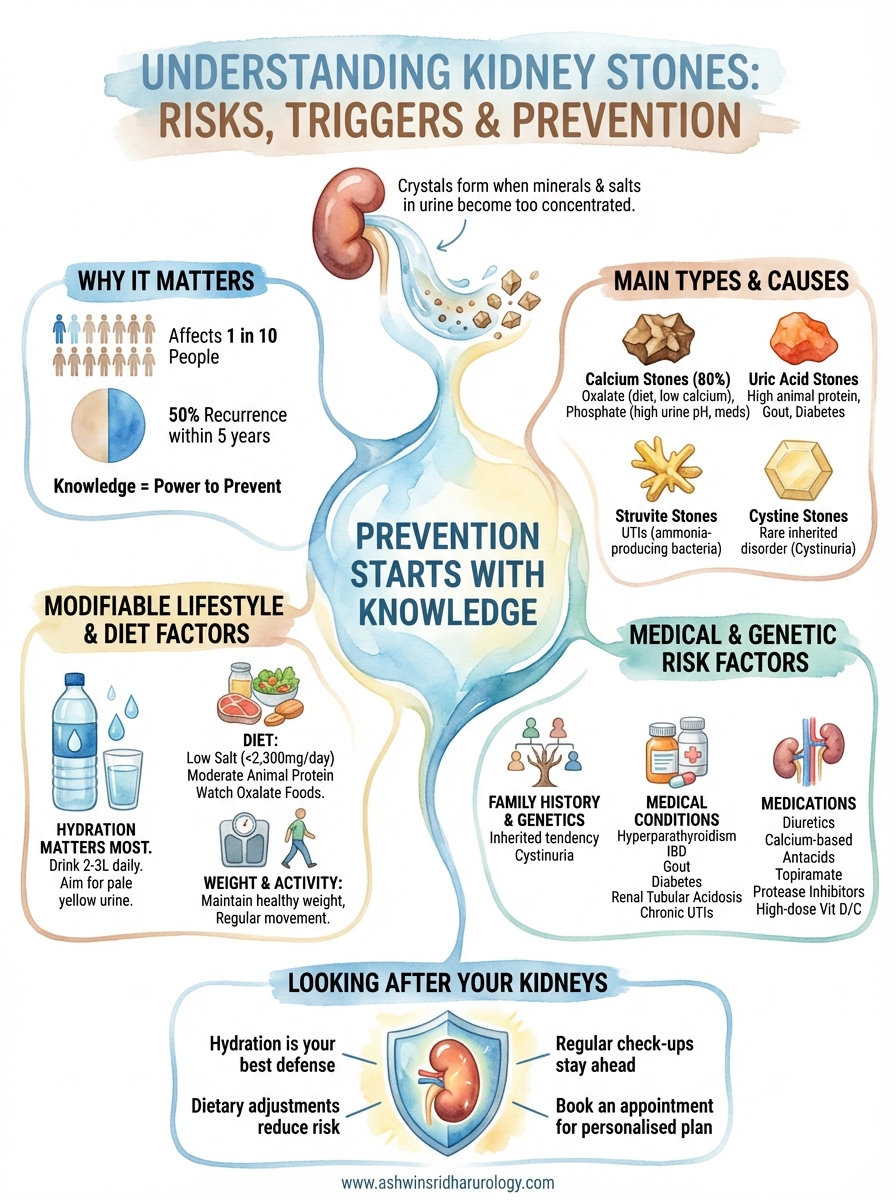
Looking after your kidneys
Understanding the causes of kidney stones puts you firmly in control of your kidney health. Hydration remains your most effective daily defence against stone formation, whilst dietary adjustments around salt, protein, and oxalate-rich foods reduce your risk significantly. You can monitor your urine colour, track your daily fluid intake, and work with your doctor to address any underlying medical conditions that might promote stone development. Small, consistent changes to your daily habits create lasting protection for your kidneys.
Prevention works better than treatment when it comes to protecting your kidneys from repeated stone episodes. Regular check-ups help you stay ahead of potential problems, especially if you have risk factors like family history, previous stones, or medical conditions that increase your susceptibility. Book an appointment to discuss your individual risk profile and create a personalised prevention plan that fits your lifestyle and health needs.