
An enlarged prostate happens when your prostate gland grows bigger than normal. The medical term is benign prostatic enlargement. Benign means not cancer. Prostatic refers to the prostate. Enlargement means an increase in size. As the gland grows it can press against your urethra and bladder, making it harder to pass urine. Most men over 50 experience some prostate growth, but not everyone develops symptoms.
You may have noticed changes when you urinate or felt concerned about waking up multiple times at night. These signs can affect your sleep, work and daily activities. This article explains the most common symptoms of an enlarged prostate, what other changes to watch for, and when you should seek medical advice. You will also learn about the diagnostic tests available and the treatment options that can help restore your quality of life.
Why recognising symptoms early matters
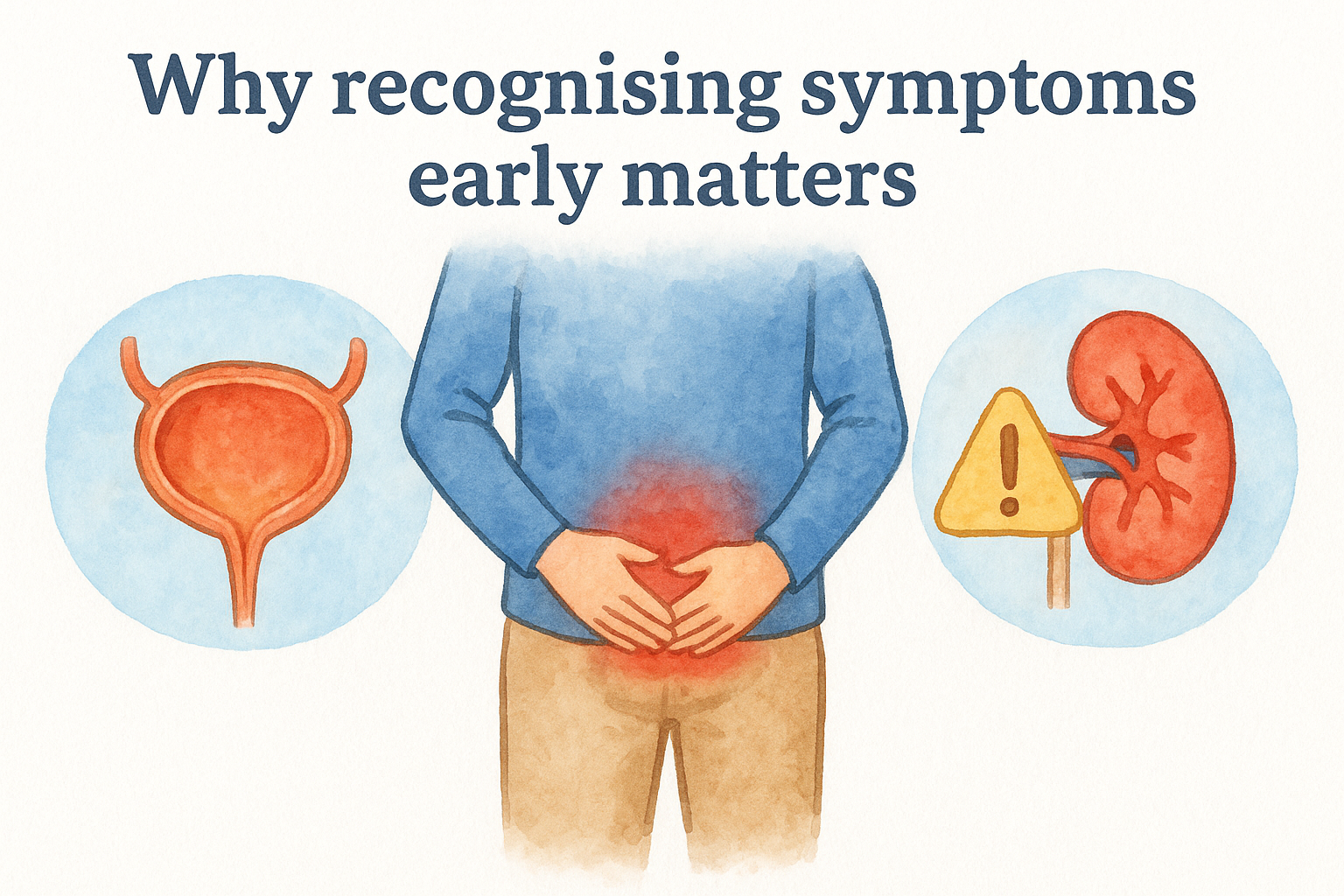
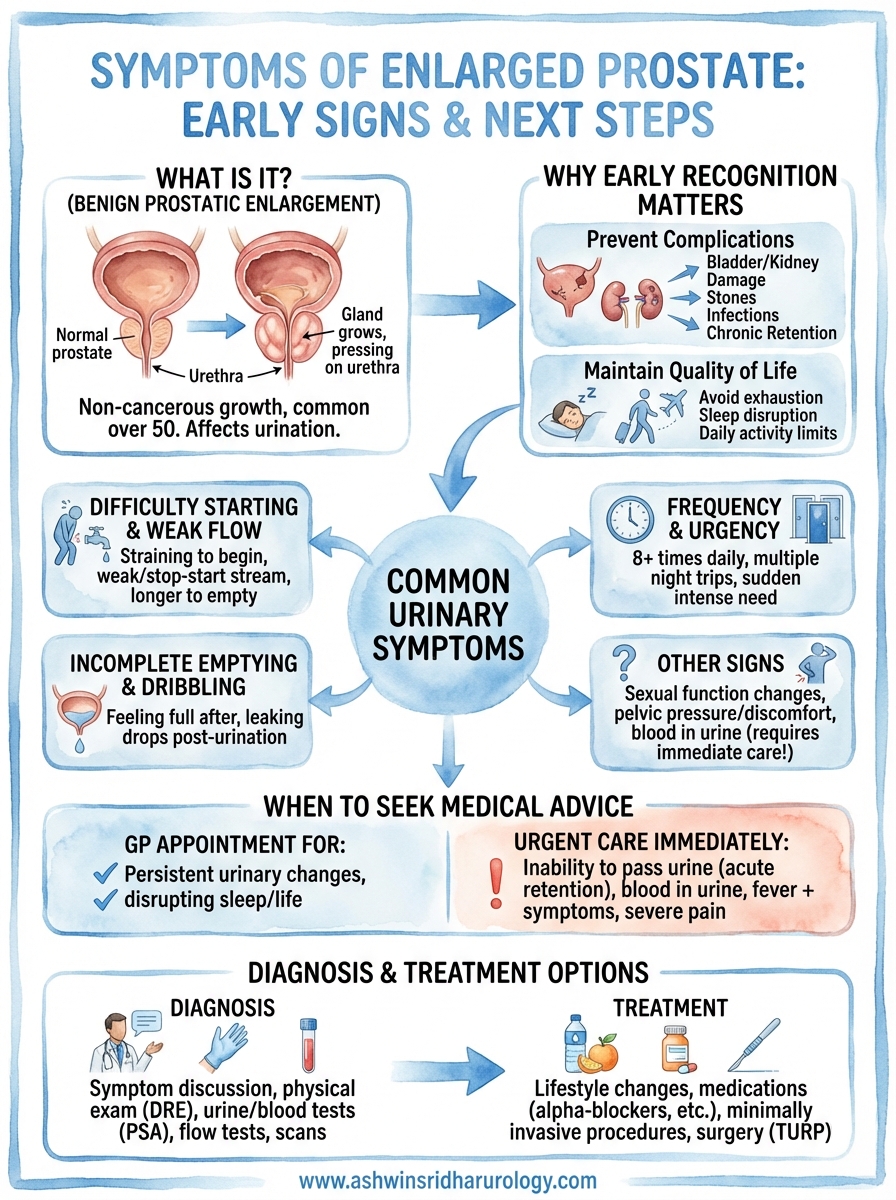
Early recognition of prostate enlargement symptoms can prevent serious complications and protect your long-term health. When you identify symptoms of enlarged prostate at an early stage, your doctor can monitor the condition and start treatment before problems worsen. Untreated symptoms can lead to bladder damage, kidney problems, bladder stones, and recurrent urinary tract infections. These complications often require more intensive treatment and can affect your overall wellbeing.
Preventing serious health problems
Ignoring early warning signs puts extra strain on your bladder. Your bladder muscle works harder to push urine past the blockage, which can weaken the muscle over time. This damage makes it difficult to empty your bladder completely, leaving residual urine that increases infection risk. Chronic urinary retention can also cause pressure to build up and damage your kidneys. If you cannot pass urine at all, you face acute urinary retention, a medical emergency that requires immediate hospital treatment.
Early intervention helps you avoid complications and maintain better bladder and kidney function.
Maintaining your quality of life
Symptoms that seem minor at first often worsen gradually over months or years. What starts as waking once at night can progress to multiple toilet trips that disrupt your sleep and leave you exhausted during the day. Frequent urination can limit your ability to work, travel, or enjoy social activities. Starting treatment early gives you better symptom control and helps preserve your independence and daily routine.
How to spot the main urinary symptoms
The most common symptoms of enlarged prostate affect how you urinate. Your prostate sits around the tube that carries urine from your bladder, so when it grows larger it can squeeze this tube and cause noticeable changes. These symptoms develop slowly over months or years, which means you might adapt to them without realising something is wrong. Paying attention to early warning signs helps you seek treatment before the condition worsens.
Difficulty starting and weak flow
You may find it takes longer to start urinating or that you need to push or strain to begin. The stream itself often becomes weaker than it used to be, and you might notice it stops and starts instead of flowing smoothly. These changes happen because the enlarged prostate narrows your urethra, creating resistance that makes it harder for urine to pass through. The flow may take noticeably longer to empty your bladder completely.
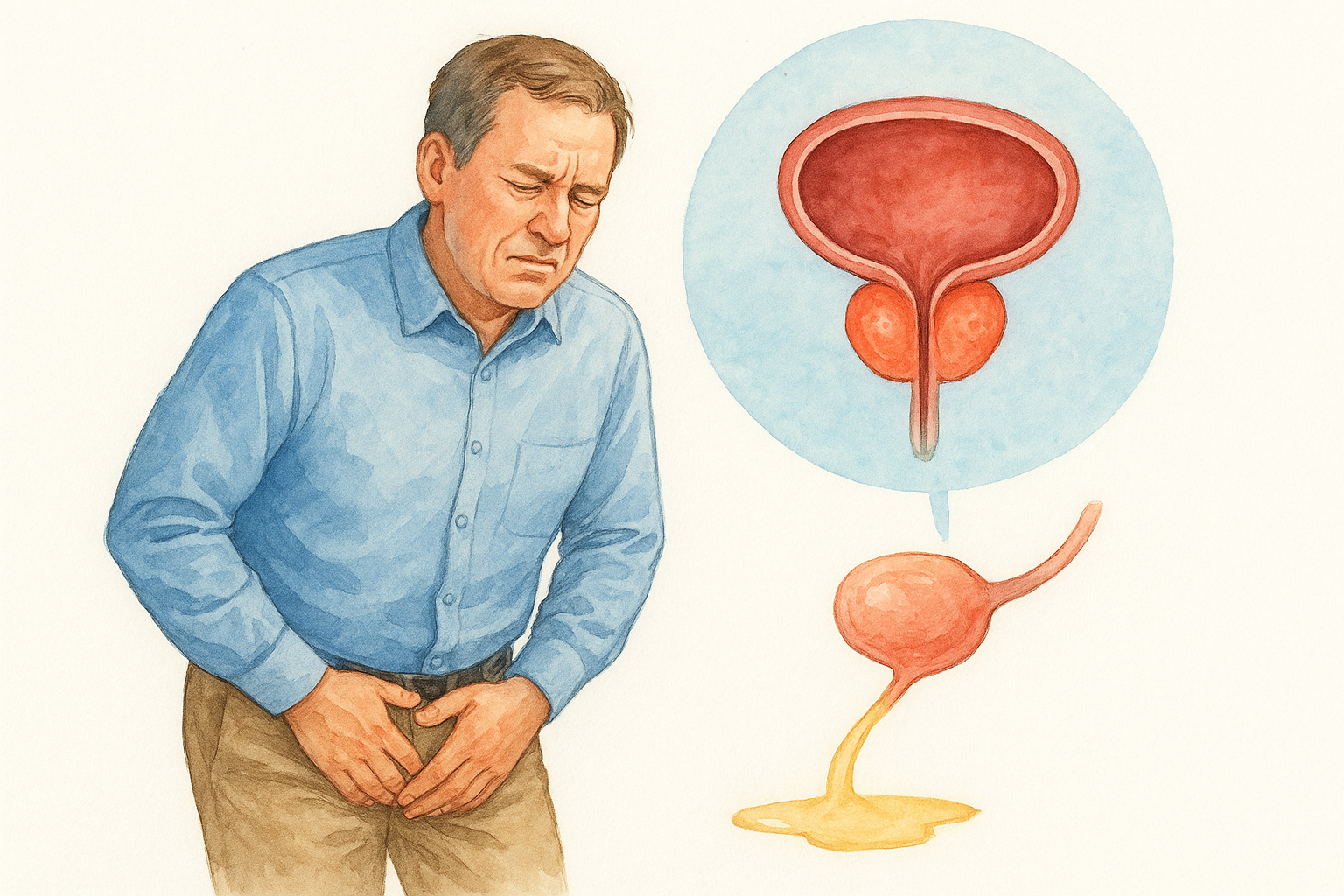
Your urine stream should flow freely without requiring effort or producing multiple stops.
Frequency and urgency
Needing to urinate more often than usual is a clear sign of prostate problems. You might visit the toilet eight or more times during the day, compared to the normal four to seven times. Night-time trips become particularly disruptive, with many men waking two, three, or more times to urinate. This symptom alone can severely impact your sleep quality and energy levels. Urgency adds another layer of difficulty, creating a sudden intense need to urinate that feels difficult to control or delay.
Incomplete emptying and dribbling
After you finish urinating, you may feel that your bladder has not emptied properly. This sensation often proves accurate, as enlarged prostates can prevent complete bladder drainage. Dribbling urine after you think you have finished is another common symptom. You might notice small amounts leaking out moments after you leave the toilet, which can be both uncomfortable and embarrassing. Some men find that pressing gently on the area behind their scrotum helps push out the last few drops and reduces post-urination dribbling.
Other changes that can point to enlarged prostate
Beyond the common urinary symptoms, you may experience other physical changes that suggest prostate enlargement. These less obvious signs often develop alongside urinary problems, though some men notice them first. Understanding these additional symptoms of enlarged prostate helps you recognise when your condition requires medical attention. Not all men experience these changes, but they warrant discussion with your doctor when they occur.
Sexual function changes
Problems with erections can develop as your prostate enlarges. You might notice difficulty achieving or maintaining an erection firm enough for sexual activity. Some men also experience changes in ejaculation, including reduced semen volume or a sensation that ejaculation feels different. The exact link between prostate enlargement and erectile dysfunction remains complex, involving shared blood supply, nerve pathways, and the effects of reduced urinary flow on pelvic muscles. Certain medications used to treat enlarged prostate can also affect sexual function, which your doctor will discuss before prescribing treatment.
Physical discomfort and other signs
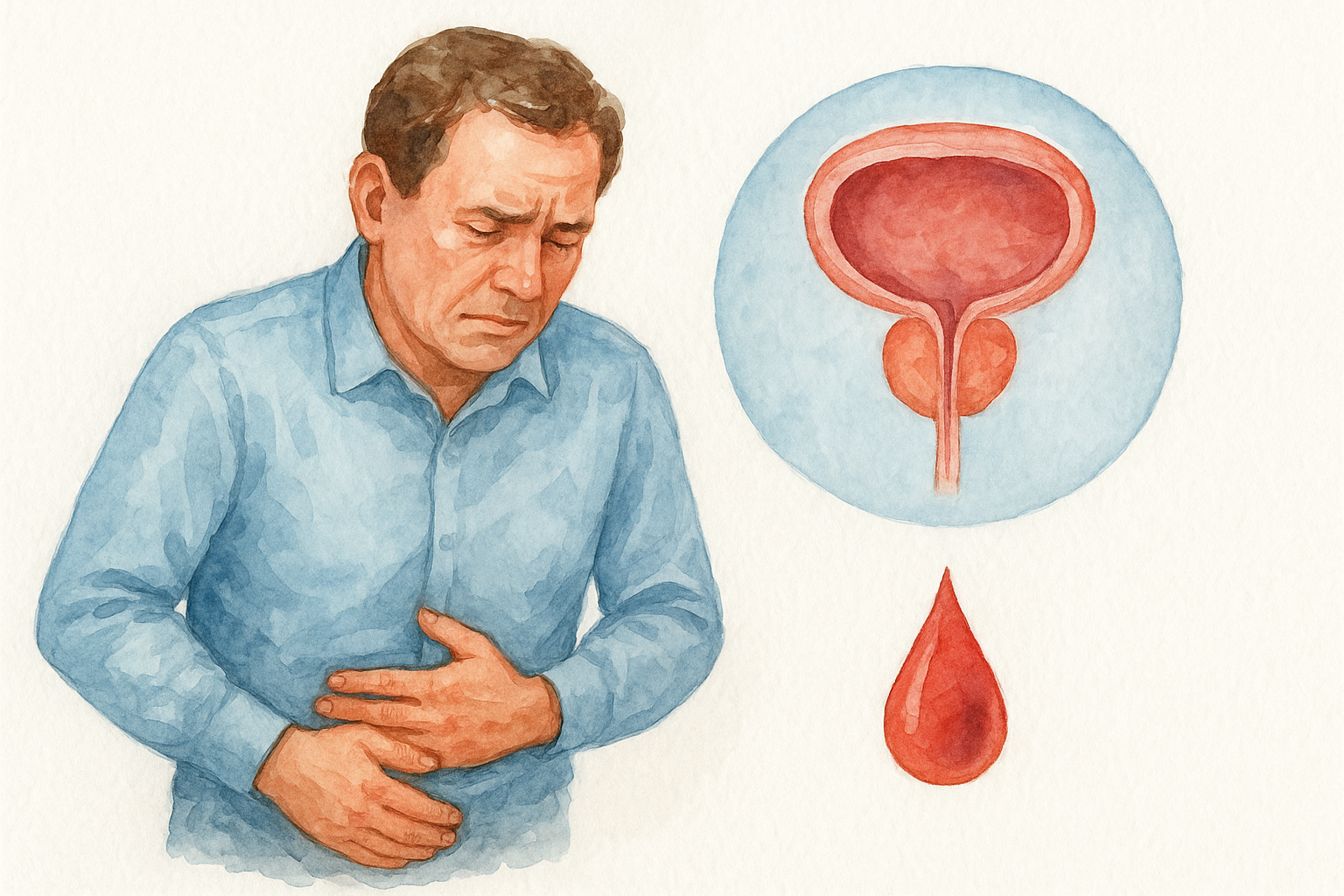
Blood in your urine appears pink, red, or brown and signals that you need prompt medical assessment. Though less common with enlarged prostate, it can occur when the condition causes bladder irritation or strain. Lower abdominal discomfort or a feeling of pressure in your pelvic area may develop as your bladder works harder against the obstruction. Some men notice pain in their lower back, though this symptom has many possible causes beyond prostate problems.
Any blood in your urine requires immediate evaluation to rule out serious conditions.
When to seek medical advice
You should speak to your GP if you experience any persistent urinary symptoms, even if they seem mild or do not bother you significantly. Early assessment allows your doctor to identify the cause and rule out more serious conditions like prostate cancer or bladder problems. Many men delay seeking help because they feel embarrassed about discussing urinary or sexual symptoms, but your GP handles these conversations routinely and can provide the support you need. Ignoring symptoms increases your risk of complications that become harder to treat over time.
Schedule a GP appointment for these symptoms
Book an appointment if you notice difficulty starting to urinate, a weak flow, or the need to urinate more frequently than usual. You should also see your doctor if you wake multiple times at night to use the toilet or feel that your bladder does not empty completely. Changes in your urinary pattern that persist for more than a few days warrant medical evaluation. Dribbling urine after you finish, sudden urgent needs to reach the toilet, or taking longer than normal to empty your bladder all suggest you need professional assessment. Your GP will review your symptoms, examine you, and may refer you to a urologist for specialist advice and treatment options.
Seek urgent care immediately
Some symptoms of enlarged prostate require immediate medical attention. Call your GP urgently or visit an accident and emergency department if you cannot pass urine at all, as this constitutes acute urinary retention. You also need urgent assessment if you notice blood in your urine, experience pain when urinating, or develop a fever alongside urinary symptoms. These signs may indicate a serious infection, bladder stones, or another condition requiring prompt treatment.
Any inability to urinate requires emergency care to prevent kidney damage.
Diagnosis and treatment options explained
Your doctor uses several diagnostic tests to confirm whether your symptoms of enlarged prostate result from prostate enlargement or another condition. The assessment typically starts with a discussion of your symptoms and a physical examination. Your GP will ask about your urinary habits, how symptoms affect your daily life, and whether you have any other health conditions. They may examine your abdomen and perform a rectal examination to feel the size and shape of your prostate. This examination involves inserting a gloved finger into your rectum, which only takes a moment and provides valuable information about your prostate.
Diagnostic tests your doctor may use
A urine sample test checks for infection or blood that might cause your symptoms. Your doctor may also request a PSA blood test, which measures prostate-specific antigen levels in your blood. Elevated PSA levels can indicate prostate enlargement, though they may also suggest other conditions requiring investigation. You might need to keep a bladder diary for three days or more, recording how much you drink and how often you urinate. This diary helps your doctor understand the severity of your symptoms. Further tests can include a urine flow test that measures how quickly you urinate, an ultrasound scan to check how much urine remains in your bladder after you finish, or a cystoscopy where a thin camera examines your bladder and urethra.
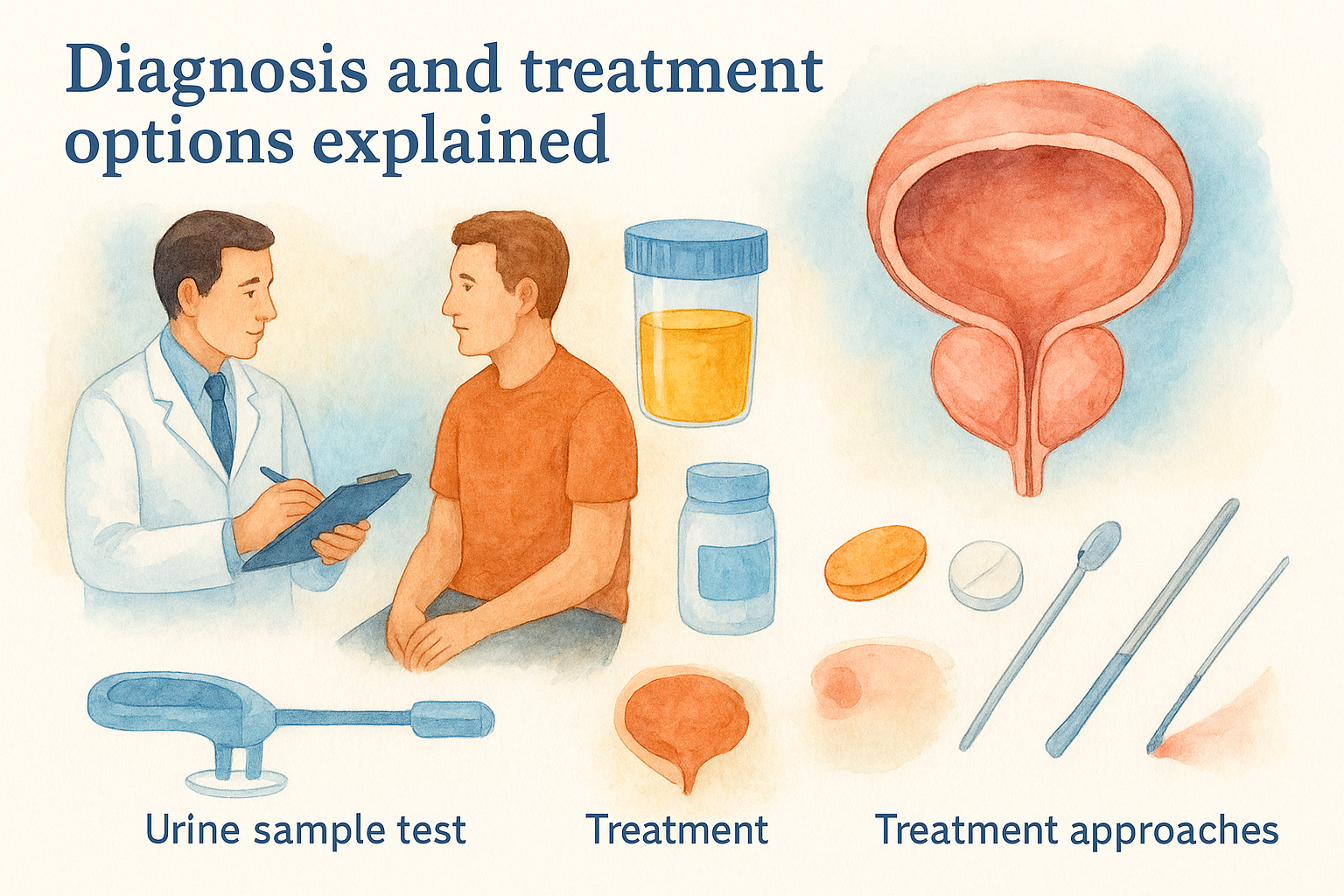
Accurate diagnosis requires multiple tests to rule out other conditions and assess severity.
Treatment approaches available
Treatment depends on how severe your symptoms are and how much they affect your life. Mild symptoms often respond well to lifestyle changes, such as reducing alcohol and caffeine intake, limiting fluids before bed, and avoiding constipation. Your doctor may prescribe medications if lifestyle changes do not help enough. Alpha-blockers like tamsulosin help relax the muscles around your prostate and bladder neck, improving urine flow. Other medicines reduce prostate size by lowering hormone levels or help control urgent urination. Surgery becomes an option when medications fail or symptoms are severe. Transurethral resection of the prostate (TURP) removes part of your prostate through your urethra. Alternative procedures use lasers, electrical current, steam, or implants to widen your urethra and improve flow.
Moving forward
Recognising symptoms of enlarged prostate early gives you the best chance of maintaining your quality of life and preventing complications. Your prostate health deserves attention, particularly if you notice any changes in urinary patterns or experience discomfort. Taking action now can prevent serious problems down the line and help you find relief from bothersome symptoms that may already be affecting your sleep, work, or social activities. Understanding what to expect from diagnostic tests and treatment options helps you approach medical appointments with confidence.
Treatment options have advanced significantly, offering effective solutions for men at every stage of prostate enlargement. Whether your symptoms are mild or severe, medical support can help restore your comfort and daily routine. If you have concerns about your prostate health or need expert assessment, book a consultation with a specialist who can provide personalised advice and discuss the most suitable treatment approach for your individual situation.